
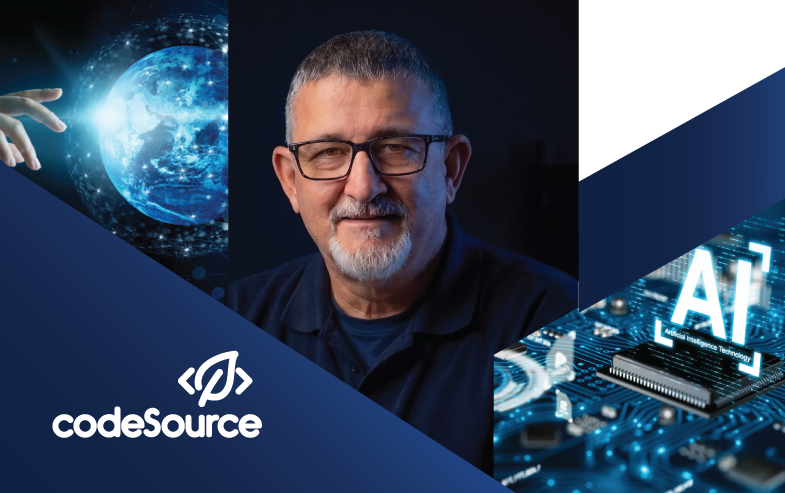
Ahead of the Curve
How Peter Prowse and codeSource are helping businesses turn technology, data, and AI into real competitive advantage.
Technology is evolving at an extraordinary pace, but for many businesses, the challenge isn’t simply keeping up with innovation – it’s knowing which technology will genuinely create value.
With more than 30 years in the IT industry, Peter Prowse has worked with some of the world’s leading technology organisations before co-founding codeSource, a consultancy dedicated to helping businesses make smarter technology decisions. His experience spans everything from enterprise infrastructure and digital transformation to data strategy and AI, giving him a unique perspective on how organisations can embrace change with confidence.
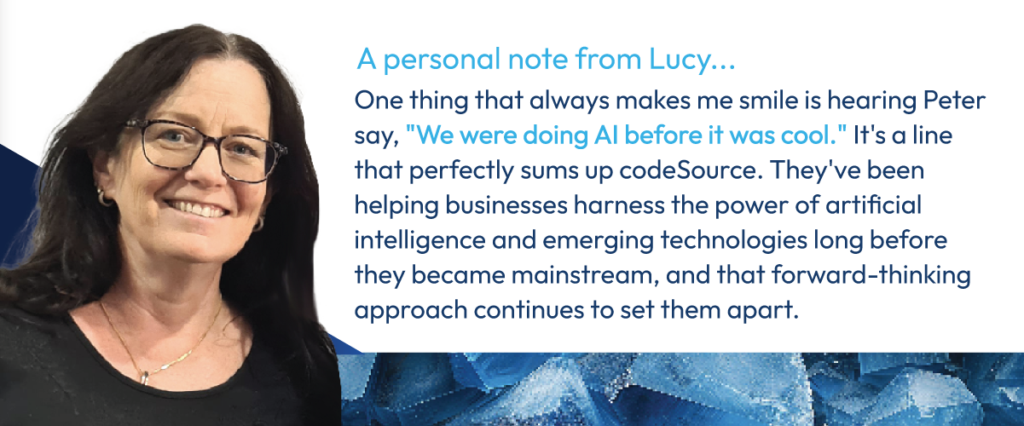
An Intro from Lucy
In this Spotlight Interview, Peter shares his thoughts on the future of technology, the opportunities and challenges presented by AI, and why aligning technology with business strategy is more important than ever.
At Blue Amber, we’ve been supporting Peter and the team at codeSource by managing their weekly Xero bookkeeping and compliance, including BAS lodgements. It’s his combination of innovation, generosity, and genuine partnership that makes working with Peter and the codeSource team so rewarding.
Working with Peter is a genuine pleasure. He’s incredibly appreciative of the work our team does and is always generous with his feedback, which means a great deal to us. He also brings an incredible depth of knowledge to every conversation. Whether it’s sharing insights on emerging technology or offering advice, Peter is always willing to make time for others.

Tell us about your business and what you do.
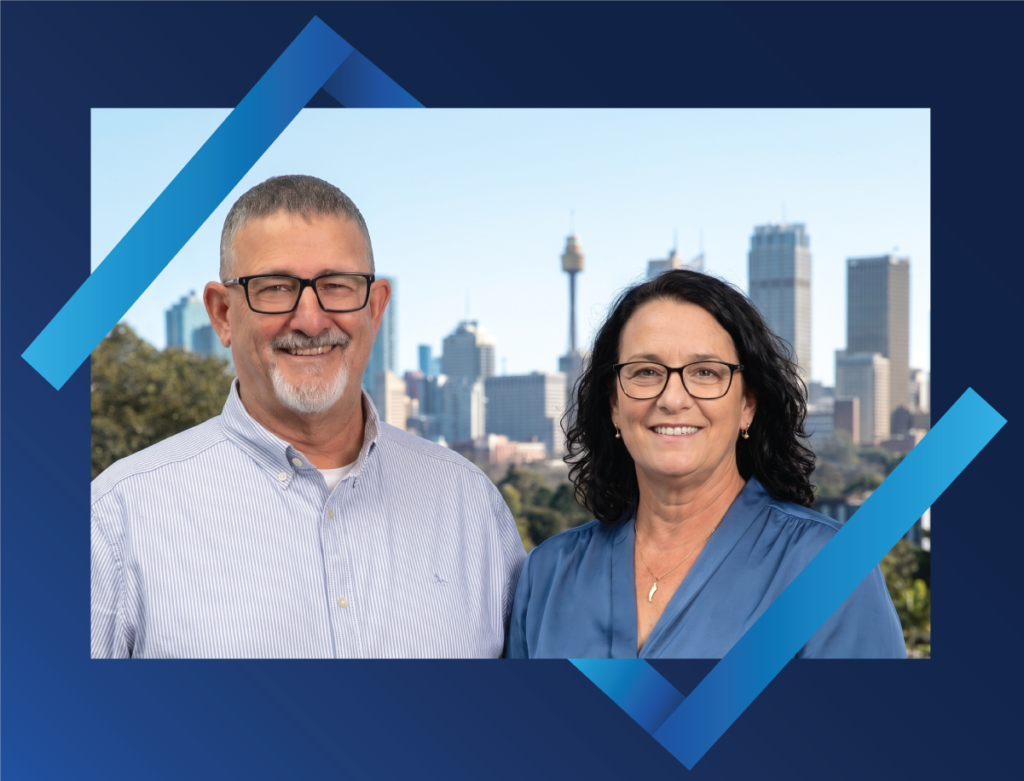
codeSource has simultaneously been in business for a bit over three years and a bit over 12 years. We brought three companies together and formed the new codeSource in July 2022.
We focus on two and a half areas. We have a full-stack software development capability, which means we do both the front end of software, such as websites and applications, and the back end, including databases and connectors, making sure the application runs properly.
The second area is our data services practice. That focuses on optimisation of data, database migrations, monitoring and managing databases on behalf of companies, data visualisation using tools like Power BI, data engineering and data analytics. In simple terms, we make sure organisations have access to the right data at the right time.
We also have a technology advisory capability. We mainly help companies looking to buy other companies by doing advisory work around their software capabilities and making sure they are what they say they are.
Is there a meaning behind your business name?
It’s literally the source of code — where your code comes from and how you make that work. It wasn’t my idea, my business partner Connah chose the name. It’s a good name – we like it but the little c and big S can be annoying, – I’m a bit pedantic so I’m constantly having to correct people’s spelling.
How did you get started in your industry?
I’ve been in IT for over 30 years, (I say that quietly). I’ve worked in large technology vendors and run businesses within businesses at national, Asia-Pacific and global levels through most of my career. In 2020, I negotiated a package out of the organisation I was working with and decided I wanted to run my own business. I did some consulting work for an IT managed services provider and then had the opportunity to become part of codeSource.
Having always worked for someone else up until March 2020, it was a real eye-opener moving into a small business and becoming responsible for everything – sales, operations, paying invoices, chasing suppliers, paying salaries and all the rest. It was a fantastic experience. Quite stressful at times as well, but I loved it. I ran a billion-dollar line of business globally for the last company I worked for, but I never had to worry about making sure there was money in the bank account to pay people. It’s been a very eye-opening experience.
Would you ever go back?
I wouldn’t go back to a large multinational. I didn’t realise quite how stressed and burnt out I was in my last role. I was travelling internationally 26 or 27 weeks a year and when I was in Australia, I was effectively doing glorified shift work. It took me about four and a half months after leaving to get back to a “normal state” – and you’re not allowed to ask what a normal state is for me.
What has your journey been like?
codeSource’s journey has been simultaneously tough and quite amazing. Connah and I have probably the most complementary skill sets of any two people I’ve ever seen. Connah loves delivery, data engineering, and technical work. I do everything else. It works really well together.
When I came in, I said I didn’t want to be working in a business where we start the year naked and by the end of the year, I’ve got my pants on. I wanted 50 to 60% of our revenue to be recurring every month. This financial year we’ll hit somewhere between 60% and 72% recurring revenue, and it changes the way you operate as a business. It’s reassuring to know most of your revenue is already there every month, and you’re just topping it up.
We’ve also worked with some really interesting and diverse businesses. One of the projects we’re most proud of is the software we built for the Ted Noffs Foundation. The software manages youth drug and alcohol counselling cases from introduction through to completion. We’re very proud of that work and the impact it helps create.
What has been the favourite part of your journey?
Probably taking a loss-making enterprise and turning it into a profitable small business. Most business owners understand that it’s quite a momentous achievement going from holding on by the skin of your teeth to becoming profitable.
From a customer perspective, helping Mercha, an online merchandising business, automate what was previously a very manual back-office process into something that runs really smoothly, with significant costs driven out, has been really rewarding.
What is it like working with a business partner and how do you define your roles?
Working with a business partner is vital. I really don’t understand how you could do it by yourself. Having a title in a small business is meaningless, it’s like an ashtray on a motorbike really. Being able to define what you’re doing and how, then operating as a team is what matters.
Small business can be lonely too, so having someone you can engage in conversation with and share frustrations with then still come back the next day and keep going is important. How we define our roles, if it’s delivery, Connah does it. If it’s not delivery, I do it. There is some crossover, but for the most part it’s a clear separation. One of my rules when we started was that nobody would report to me, and I’ve successfully achieved that objective so far.
How would you describe your leadership style and how does it influence your team?
My leadership style is collaborative. There’s a time for debate and there’s a time to get on with it. I’m happy to discuss things with people until they’re blue in the face when we’re making a decision, but once it is made and agreed on as a team, then it’s time to execute.
I prefer coaching people rather than telling them what to do. If you tell someone what to do, they’ll complete the task, but you’ll have to come back the next day and tell them again. People – especially younger generations – respond much better when they’re able to discover things for themselves. Having someone there to support them, and course-correct if things start going wrong.
How many are in your team?
There’s five of us in total, plus subcontractors when needed. These days our main subcontractor is Claude, the AI tool. The process mapping aspect is not really something AI can do at this point, the most important work is still understanding what the customer needs, identifying gaps and designing the architecture. We use Claude for everything else.
What makes your company stand out in the market?
I think there are two things. The first is experience, Connah and I have both been in the industry for more than 30 years. We bring a combination of business and technical experience that many newer business owners simply haven’t had the opportunity to build yet. The second is that we’re brutally honest. We spend a lot of time talking people out of doing things rather than talking them into action. If we don’t think something will achieve the outcome they’re looking for, we’ll tell them.
One of my frustrations is seeing organisations spend a lot of money on tools that don’t meet their needs. I’m a big believer that it’s people, process and technology – in that order. Most businesses don’t want to fix people or processes, so they go through the bright shiny toy syndrome and hope those tools solve the problem. That doesn’t work so we get a bit Emperor’s New Clothes on them, which can be uncomfortable.
Please share a little about your purpose, and aspirations for the business.
Our purpose is to help small and medium organisations operate like enterprises. Large enterprises like Westpac or Commonwealth Bank have access to lots of people and lots of money. Small and medium businesses don’t, but they still need competitive advantages.
We help create those advantages through smart software, better processes and insights into their own information so they can make decisions faster and more effectively. We have no interest in working with large corporates. We want to work with organisations between roughly 50 and 750 staff and help them grow without spending their children’s inheritance to get there. Our aspiration is very similar to our purpose. We want to help small and medium businesses grow, and we’ll grow alongside them by continuing to support their success.
How would you describe your core values?
My core values are fairly simple. I believe in operating with integrity and honesty. I believe in delivering value to the organisations we work with. Connah and I are very closely aligned in our values, and that drives codeSource’s values as well. If we don’t think we can help you grow your business, then we don’t want to take your money.
What drives you every day?
My car, actually my motorbike, my Triumph. But what drives me is I like to be challenged. I like having something I’m working towards. I genuinely enjoy helping people and helping them become successful. A lot of people at my age are looking at retirement, but I don’t think I’d know what to do with myself. I’d probably sit on the couch and rot. I need something stimulating and challenging. I couldn’t turn up and do the same thing every day – I need variety.
What feels most important about the service you provide?
The capabilities we provide doesn’t directly save lives but helps our organisations save lives. The Ted Noffs Foundation as an example, providing the underpinning technology that helps them save young people. We also provide technology for Quality Practice Accreditation, helping GP practices complete accreditation more efficiently. We provide around-the-clock support for Greencross, supporting veterinary clinics, Petbarn stores and animal hospitals that operate 24 hours a day. I like to think we’re providing the technology that lets our customers do what they do best, kind of a reflected glory.
Describe what challenges have you faced along the way, and how have you overcome them.
We’ve nearly gone out of business twice. The biggest challenges came while transitioning from a project-based business to one with recurring revenue services. As recurring revenue was growing, project revenue still needed to remain strong, and we got a few things wrong.
There were times when we didn’t pay ourselves because there wasn’t enough money in the bank account, although we always made sure staff were paid. We’re still focused on growing recurring revenue every month, but we’ve come a long way.
What advice would you give to others looking to solve similar challenges?
If you believe in what you’re doing and you’ve got a quality product or capability, stop waiting for the right time because there is never a right time. If you have a burning desire to start a business or solve a problem, don’t wait. The worst thing that can happen is that the business folds. That sounds horrendous, but you can recover from it. Don’t be afraid to take the first step. I see a lot of people trapped in analysis paralysis and by the time they’ve got to the other side it’s too late.
Starting a business is hard. You work a lot of hours and there are sacrifices. Personally, I could probably earn three times as much as I do today. But the satisfaction that comes from building something that is yours can’t be compensated by money.
What innovations in your industry are you most excited about?
Equal parts excited and terrified, depending on the day. An economic statement which will bore everyone reading is that Australia has a massive productivity issue, and we had a few reforms in the early 1980s to 2000s which improved our standards of living and economic wellbeing quite significantly. Since then, it’s been declining and I think AI is our best hope as a technology to improve productivity over the next 10 to 20 years. According to Anthropic, they see a 1.8% increase annually through the use of AI.
Why do you think it has been declining?
Well, probably moving into a political statement, I think we’ve become “fat, dumb and happy” as a country and we don’t think we need to reform to drive that productivity. If you look at things like the tax system, it’s still heavily weighted towards PAYG rather than a broader base, and we don’t really focus on innovation.
A simple example is that there are software products today that can automate 80 to 90% of business processes, and organisations still choose not to do it because it requires changing processes and sometimes people.
On the flip side, AI is exciting because it can genuinely lift productivity and give small and medium businesses capabilities, they’ve never had before. Obviously, the more terrifying view is that it takes all our jobs, and we end up in a Terminator-like world, but I lean much more toward the excited than the terrified.
One area is market research. Proper market research used to cost tens of thousands of dollars. With AI and the right prompts, businesses can now access significant research capabilities for the cost of an AI subscription.
The second area is administration. Every business has administrative work that needs to be done. AI can handle 80 to 90% of that work, freeing business owners to focus on customers and growth.
The third area is software development itself. Businesses can now build software using plain language rather than traditional coding. While expertise is still required to design and direct those systems, AI has significantly reduced the cost and complexity of creating software solutions.
What’s the best piece of feedback you’ve ever received from a customer?
The best feedback we ever received was actually from a customer who chose not to work with us. It sounds a bit weird, but you learn a lot from failure. Success is a good teacher. Failure is a fantastic teacher. They explained exactly why they weren’t proceeding, and that feedback highlighted issues with our pricing model and implementation approach. If you lose a deal and the customer offers a review, always take it. Understanding why you lost helps you win the next one.
How do you define success for your business?
I define success using three measures. First, do we have enough cash in the bank to pay staff and suppliers? Cash flow is king in a small business. Second, are we growing, and are we growing the parts of the business we want to grow? Third, are our customers happy?
If customers aren’t happy, you’re never going to grow.
We recently had a customer tell us things weren’t working as expected. Instead of walking away, we put together a recovery plan, worked through the issues and improved the relationship. I even got a smile out of the customer the other day. Happy customers, sustainable growth and healthy cash flow are my measures of success.
Working with Blue Amber
What were you looking for in a bookkeeping service?
I wanted someone who knew what they were doing, could provide advice where appropriate and proactively help us get things done. Our previous bookkeeper created significant problems. We were chasing them every quarter to complete the BAS, they made mistakes with our superannuation, and we were receiving letters from the ATO because things weren’t being done properly.
One example was when Lucy immediately offered to handle our iCare wage declarations, which I’d been putting off for three years. They were sorted very quickly. I also love receiving the weekly update emails from Naomi. We always know where things stand. It’s not something that’s left until the end of the quarter.
What made you choose Blue Amber?
We met through BNI, and I’d heard glowing references from other clients, both within Network Collective and other chapters. The second reason was the team structure – we weren’t dependent on one person. If Lucy is away, someone else can step in. If Naomi is unavailable, there’s still support available. It’s not a one-man band, and that makes a real difference. The recommendations were correct and we’re very happy with the decision.
How would you describe the value of our product/service?
There are two elements. The first is peace of mind. I don’t have to think about bookkeeping anymore. I know things are being done properly and on time.
The second is competence. After our previous experiences, having a team that follows a process, communicates regularly, and simply gets things done properly is incredibly valuable. I don’t have to worry about BAS, IAS or deadlines. Everything arrives when it’s supposed to, and that allows me to focus on growing the business.
How have we helped you be more successful in your business.
The honest answer is that I don’t know yet, because the relationship is still relatively new. What I do know is that taking bookkeeping off my plate has immediate value. I know everything is being handled, and I don’t need to worry. For me, that peace of mind and the time it frees up is already incredibly valuable.